








Medical
About Us

Our Fields
Sustainability

Medical

Environment

Social


Sustainability
Malaria is a parasitic infectious disease transmitted through the bite of mosquitoes carrying the malaria parasite. It causes symptoms such as fever and chills, and in severe cases, it can be life-threatening.
In addition, there are cases of asymptomatic infection, where individuals are infected but show no symptoms, as well as low-density infections, in which the number of parasites in the body is small. These infections are difficult to detect and may contribute to malaria transmission.
Because treatment methods differ depending on the species of parasite, accurate identification is important for appropriate treatment.
・Likely to become severe and requires prompt treatment
・High risk of being life-threatening
・Common in the African region
・Symptoms are relatively mild
・Risk of relapse
・Particularly common in Southeast Asia and South Asia
Malaria-LAMP is a diagnostic method that enables identification of parasite species (Pf/Pv) as well as detection of low-density infections, thereby contributing to strengthening malaria control efforts.
By utilizing differences in the DNA of malaria parasites, Malaria-LAMP can determine both the presence of infection and the parasite species (Pf/Pv), enabling prompt and appropriate treatment.
Due to its high sensitivity, Malaria-LAMP can detect asymptomatic and low-density infections that are difficult to identify using conventional methods.
This helps prevent missed infections, supports identification of infection sources, and contributes to preventing malaria transmission.
Malaria-LAMP has been developed through collaboration with research institutions and public support programs both in Japan and internationally.
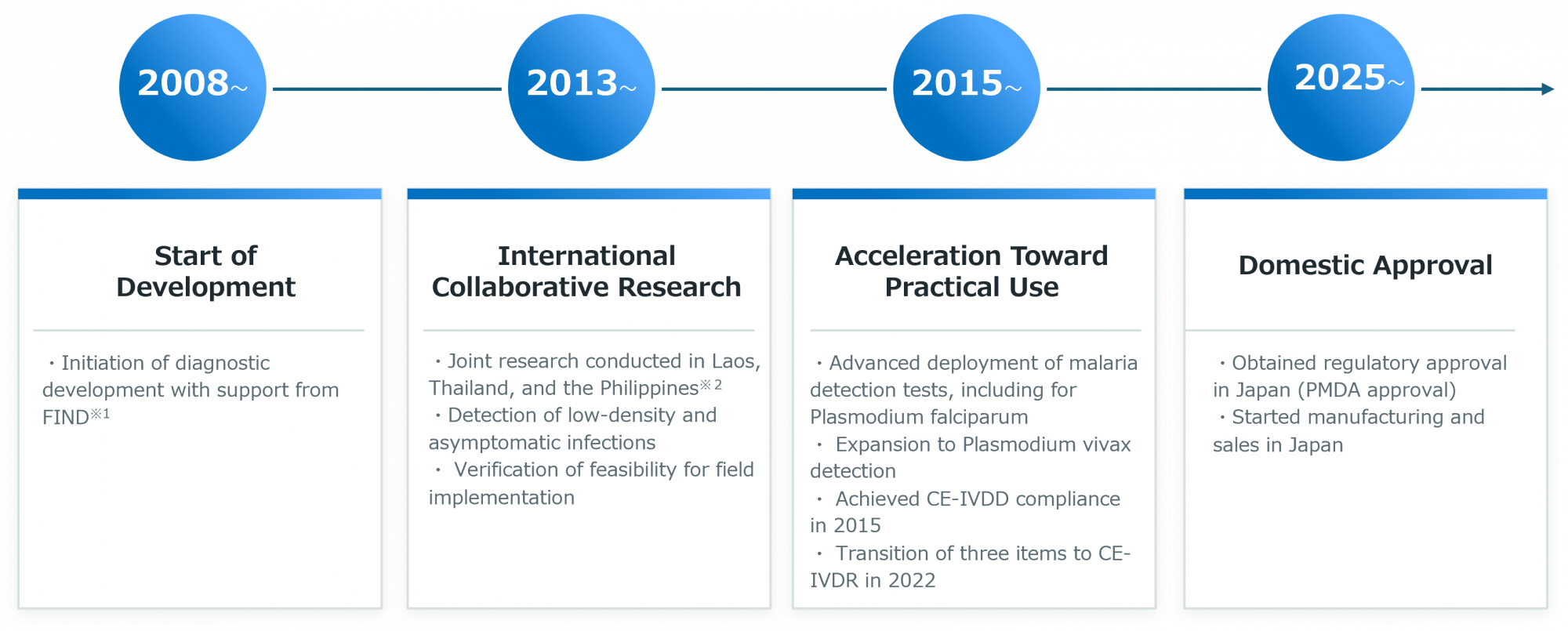
※1 Foundation for Innovative New Diagnostics
※2 Laos SATREPS Joint Research:
“Research on the Development of Innovative Technologies Based on Genetic Epidemiology for the Control of the Spread of Malaria and Other Major Parasitic Diseases in the Lao People’s Democratic Republic”
Malaria-LAMP Evaluation Study in Thailand:
“Loop-Mediated Isothermal Amplification Assay for Rapid Diagnosis of Malaria Infections in an Area of Endemicity in Thailand”
International Collaborative Research with NCGM (National Center for Global Health and Medicine) and the University of the Philippines Manila:
“The validity and applicability of Loop-mediated Isothermal Amplification (LAMP) in the diagnosis of malaria in the Philippines,” etc.
The initiatives surrounding Malaria-LAMP have been shaped through years of collaborative efforts with numerous academic researchers, healthcare professionals, and related organizations, spanning research and development, field implementation, institutionalization, and global deployment.
Moving forward, we will continue to promote its use as a highly sensitive diagnostic tool that contributes to achieving Zero Malaria.
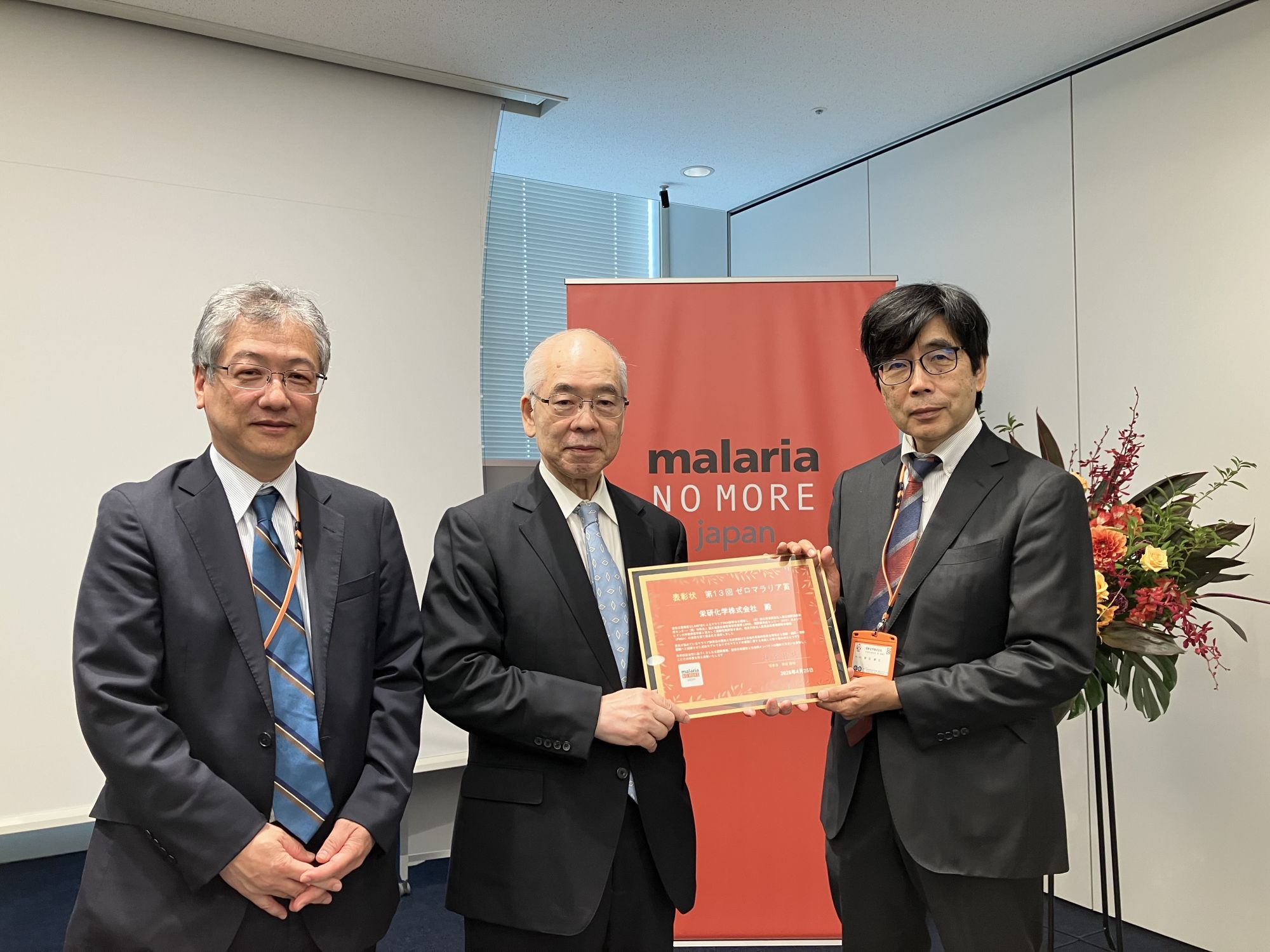
Our efforts in the development and social implementation of malaria diagnostic methods have been recognized as a successful model in which innovative Japanese technologies have been translated from research into systems, clinical practice, and global deployment.
In recognition of these achievements, we were awarded the 13th Zero Malaria Award (presented by Malaria No More Japan). Our initiatives have been highly regarded as outstanding contributions toward achieving Zero Malaria, with particular recognition given to their strong scientific validity, potential for further international expansion, technological advancement, and significant social impact.